
Published November 7, 2026
4 Mistakes We See Home Buyers Make


Nobody wakes up wanting to miss the house they already pictured themselves in. But when the lease renewal comes back higher than last year, or the second bedroom is doing the job of a nursery, an office, and a closet at the same time, or you are tired of asking for permission to hang a shelf, a purchase starts to make sense. In some cases it might be longer commute than you want, a yard you would like for the dog, or a neighborhood closer to work or family.
We are going to walk you through the 4 mistakes we see most often, why each one matters, and what we do to help you avoid them.
Mistake 1: Not getting pre-approved early
Pre-approval is when a lender reviews your income, debts, credit, and savings and tells you in writing how much they are willing to lend. Many buyers plan to handle it once they find something. The problem is that finding something is exactly when you have the least time.
When you find a home you want, the seller and their agent want to know you can close. A pre-approval letter is one of the first things they look for, and an offer without one is easy to set aside. Pre-approval also takes some time, because the lender needs your documents and has to review them. If you start the preapproval process after you find the home, its possible another buyer, who has their preapproval, get this offer accepted before you can get in the mix.
There is a second reason that matters as much: pre-approval tells you your budget. That is your down payment, closing costs, and the monthly payment with taxes and insurance. Knowing those numbers before you shop means you are not guessing once you find a home you want. You will know your monthly spend and be able to plan accordingly.
Moving The Triangle can connect you with our trusted lending partners so you know your numbers before you tour your first home.
Mistake 2: Waiting for the market to change
Maybe you are ready. Your pre-approval is in hand, your job is steady, and you have the savings. But you keep hearing that rates might drop, or prices might come down, so you decide to wait for "the bottom."
Nobody can time the market. Not us, not the news, and not the guy at the cookout. Rates and prices move for many reasons out of our control, and the reality is that we only know that bottom in hindsight.
Waiting has its own costs. While you wait, you keep paying rent (let’s be clear that’s the landlord’s mortgage) and you do not build equity (the part of the home's value you own). If rates do drop, more buyers may come back into the market at the same time, which can mean more competition. The life reasons that made you want to move, such as the extra bedroom, the shorter commute, or the yard, usually don’t change while you wait.
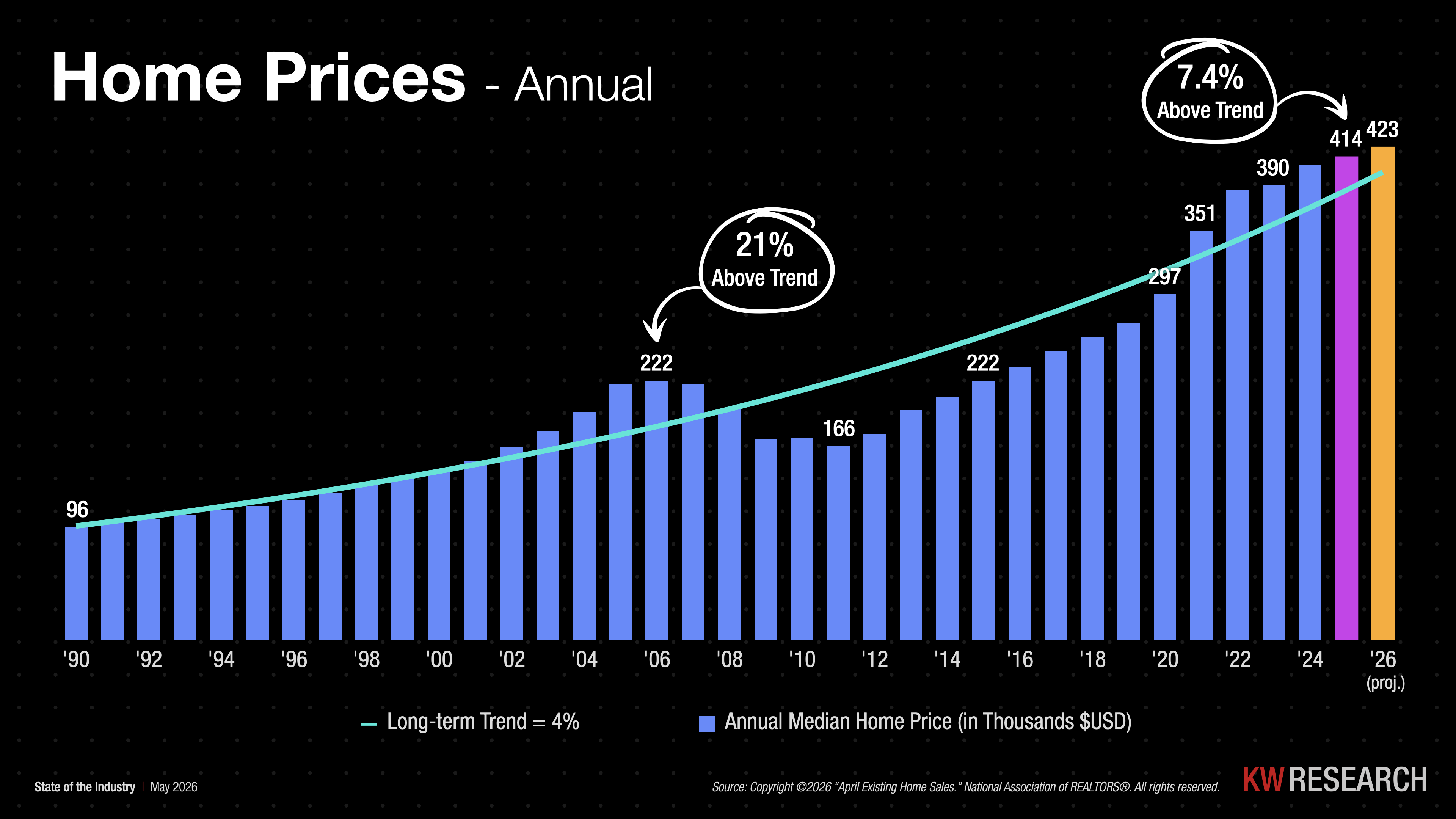
We are not telling you to buy before you are ready. If you are not ready, waiting is the right call. If you are ready, present offers and buy now. The market may drop a little more. The chart below shows what happened during the housing downturn: prices fell sharply in 2008 and 2009 and stayed low into 2012. Within 4 years of the bottom, national home prices were back above their 2008 levels and continued rising. The green line shows the long-term appreciation trend of about 4% a year. It is separate from the bars showing actual annual median home prices. Waiting for a perfect bottom means missing years of ownership and equity while you keep paying rent. We will walk you through the numbers on homes that fit your budget.
Mistake 3: Not hiring an agent
You can find homes online yourself, but the search is the easy part. The hard part is everything after you find the home.
An agent who represents you helps you decide what to offer and how to structure it, including the due diligence fee (money paid directly to the seller for the right to inspect the home and walk away during the due diligence period), the earnest money deposit (an amount held by a neutral party, usually the closing attorney, to show you are serious, which is applied to your purchase at closing), and the closing date. The due diligence fee is non-refundable, so the seller keeps it if you do not close, and if you do close it is credited toward your purchase price. Your agent helps you read the inspection report, decide which repairs are worth asking for, and negotiate them. Your agent also keeps track of the deadlines in the contract and coordinates with the lender and the closing attorney, so you know what comes next before the day it is due.
The listing agent works for the seller. Their job is to get the best result for the seller. When you hire your own agent, someone on your side of the table is watching out for your money and your timeline.
We handle the offer, the negotiation, the inspections, and the coordination with lenders and attorneys from the first showing to closing day.
Mistake 4: Not taking your agent's advice
We get it buying a home is a big deal. That is why you hire a professional to guide you through the process. Unfortunately, many buyers will sometimes rely on the advice of people that they know, like, and trust but who don’t have the experience and training your real estate agent has. As much as most people don’t want to hear it, your parents who bought a house 15 years ago; a friend's aunt in real estate in another state; or that friend who bought a flip and had a bad experience last year a are not the people you need guiding you through the largest transaction you will make. These people care about you and mean well. The trouble is that the market, the contracts, and local negotiating norms vary. What worked 15 years ago may not fit the market today, and what is normal in one area may not apply in another, and each and every transaction is different. North Carolina adds one more wrinkle: we use a due diligence period and a non-refundable due diligence fee, which works differently than the process in many other states. Advice that sounds smart elsewhere can cost you a home, or money, here.
You hired an agent for a reason. Your Moving The Triangle agent is an expert at understanding the market and how to craft an offer to get you the best deal possible and get you the home. In North Carolina a licensed broker has a fiduciary responsibility to protect your financial best interest (even if it costs them money). Your agent is looking at the homes selling around you right now, reviewing the disclosures you will sign, investigating the properties you like, and preparing the contract you will sign. They are talking with the listing agent on the home you want to find out what they can uncover. Ask your family and friends for support. Then ask your agent the hard questions, and expect a clear answer and the reason behind it. We will always explain why we recommend something, so you can decide with the full picture in front of you.
If you want to learn more
If you are thinking about buying, the first step is a conversation. We will connect you with our lending partners, talk through your timing, and lay out what the process looks like for you. You can use the contact form on our website (https://mttsold.com/contact) or reach us at 919-272-3217.
Let me know what questions you have.
Daniel Virag
Moving The Triangle Realty | Keller Williams Raleigh
(919) 272-3217
daniel@movingthetriangle.com
4700 Homewood Court, Suite 223, Raleigh, NC 27609